Added to the wishlist: The Age of Absurdity

Reviewed in The Guardian:

“Foley is not one for the “fatuous breeziness” of bullet-pointed self-help manuals or the nostrums of the new science of wellbeing… Here are Christ and Buddha, Marx and Freud, Spinoza and Nietzsche, Joyce and Proust, mixing it with brain experts Pinker and Rose. It’s not so much a trawl of great minds as proof that they think alike when it comes to human frailty – notably the way our base desires hoodwink our higher-reasoning selves and drive us mad with one unmet expectation after the other.

Modern life, Foley argues, has made things worse, deepening our cravings and at the same time heightening our delusions of importance as individuals. Not only are we rabid in our unsustainable demands for gourmet living, eternal youth, fame and a hundred varieties of sex, but we have been encouraged – by a post-1970s “rights” culture that has created a zero-tolerance sensitivity to any perceived inequality, slight or grievance – into believing that to want something is to deserve it.”

Welcome to The Age of Absurdity – as an excellent review on Amazon puts it: “But then, you’ve watched Monty Python, so you already knew that.”

We’re hiring

No, not The Wired Jester, but the two publications I work on – Custom PC and bit-tech. We’re looking for a staff writer! It’s a great entry into the world of technical consumer journalism, and it’s a full time role, based at our central London offices. Dennis as a whole is hiring quite a few people at the moment, including a lot of web development types. Full details on the corporate page.

Added to the wishlist: The Lost Books of the Odyssey

Previewed in the New York Times:
The Lost Books of the Odyssey purports to be a compilation of 44 alternate versions of Homer’s epic… In some of the alternate histories Odysseus returns to Ithaca only to find the island abandoned, or Penelope a ghost or married to a man who is “soft, grey and heavy.” In others Achilles is a golem who slaughters Greeks and Trojans alike, while Odysseus marries Helen or kills her, doesn’t make it back home at all, becomes the author of “The Odyssey” or is confined to a sanatorium for a psychiatric evaluation.”
Sounds brilliant – the Rashomon story structure seems to fit the nature of Odysseus’ quest for home and his desire to return to what was lost. The writer, Zacharay Mason, sounds interesting too: he’s “a computer scientist specializing in search recommendation systems and keywords, once worked at Amazon.com.”
via Robin Sloan. Not out in the UK until May.

On Grief, and the Year of Her Magical Thinking

And so, the second book of the year becomes a DNF. When I closed The Year of Magical Thinking – perhaps the 21st century’s most highly praised book on death – this evening, around page 120, I knew I wasn’t going to re-open it. Highly praised, but I just didn’t get it; indeed, I found it irritating, and yes I feel terrible for saying that. This is not the story of a woman who lost her husband to a sudden heart attack and who suffered a daughter drifting near to death thanks to pneumonia. This is a book about those real events.

Perhaps it’s not a bad book; but it is not what the reviews and the coverage said it was, and crucially, it was not what I wanted; the danger of writing a book about something, especially something like grief – rather than someone (fictional or real), somewhere, or some story – is that you will attract people who have been affected by that thing in the real world, and drawn by the dark energy of the subject, not the presence of the writing or the power of the book, they are hunting. Those people – and I am one – are looking for something very specific, specific to them, their own truth, and your book about your pain will seem to them meagre, dry and so completely curious as to be incomprehensible. Consider how sad this comment about the book on Amazon is; bone-dry, when the facts are full of tears:

“I bought this book as I thought it was a book to help bereaved people generally, but although parts of it helped regarding the loss of my daughter at the age of 45, I would say that it is really for widows.”

Two cool Japanese iPhone apps

Via App.itize.us, a new iPhone apps blog, comes 51 Japanese Characters. Simple but fun, it features 51 Japanese “characters” – otaku, samurai, gyaru etc; give it a shake and it’ll mix and match their body parts.

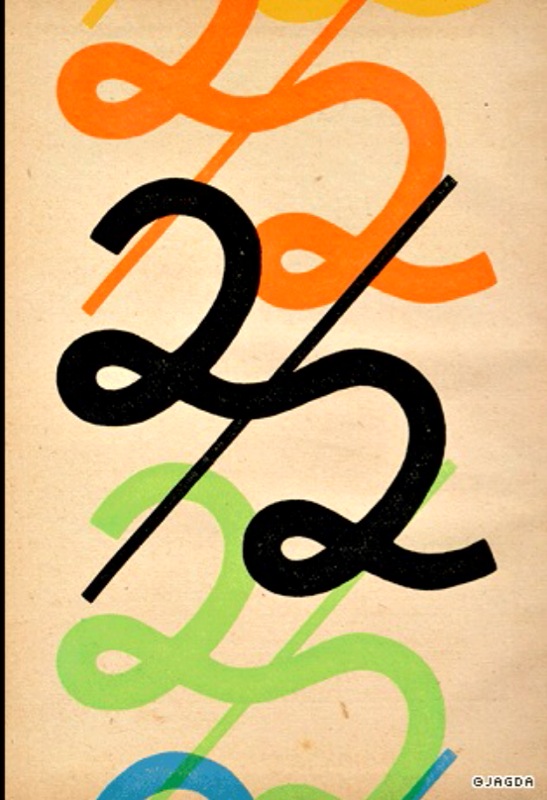
Secondly, from the Japan Graphic Designers Association (JAGDA) and Heidelberg Japan K. K.,  “(^_^)365(O_O)” (Hello 365) tear-off calendar for 2010. 365 varying images from a variety of designers which the app makes it easy to export, so they’re ideal for use as iPhone wallpaper. The image above is from the 2nd of Feb, and it’s the one I’m currently using.

More people visit the Blackpool Tower each year than the Pyramids

This is and other excellent factoids in a strange little piece on the Guardian website:

“Inspired by Mayor John Bickerstaffe’s visit to the Eiffel Tower in 1889, it survived a fire at the top eight years later and was largely rebuilt in 1921-4 because cheapskate owners had failed to use rust-proof paint. Mistaken for a lighthouse, it lured the Norwegian barque Abana ashore in 1894. With good binoculars, her fragmentary remains at low tide off Little Bispham form part of the middle-distance view.”

Previous posts on Blackpool on The Wired Jester.

What is David Cameron an expression of?

“You know, when they forced Khruschev out, he sat down and wrote two letters to his successor. He said – ‘When you get yourself into a situation you can’t get out of, open the first letter, and you’ll be safe. When you get yourself into another situation you can’t get out of, open the second letter’. Well, soon enough, this guy found himself into a tight place, so he opened the first letter. Which said – ‘Blame everything on me’. So he blames the old man, it worked like a charm. He got himself into a second situation he couldn’t get out of, he opened the second letter. It said – ‘Sit down, and write two letters'” – An old anecdote, quoted in Traffic

Barack Obama needed a response to the loss of Teddy Kennedy’s old seat to the Republicans, and while he talked about being more direct with the voters, and, as per the advice from Khruschev (or was it Stalin?), he landed a punch on the old guy as well:  “Here’s my assessment of not just the vote in Massachusetts but the mood around the country — the same thing that swept Scott Brown into office swept me into office…. People are angry and they are frustrated. Not just because of what’s happened in the last year or two years, but what’s happened over the last eight years.”

Fine stuff, but it’s the first part of Obama’s reply that’s really interesting – and perhaps shows his true character, an incisive, but remote observer comfortable with theory, even at his own expense. To be a compelling politician, to achieve his remarkable victory, he needed to be an expression of cultural forces, views and desires.

So what then, is David Cameron – who at times has tried to harness some of the Obama magic – an expression of?

Continue reading “What is David Cameron an expression of?”

Books I’ve Read, 2010

Previously:

Starting the reading for 2010 a little late; it took me a while to finish Richard Holmes’ Age of Wonder, which is both excellent and substantial. As per usual, this post will be updated throughout the year with brief impressions of the books and a slightly less than arbitrary star rating. Thanks to Christmas presents, loans, and plenty of Amazon time, the to-read pile is so tall as to be in danger of toppling over. Time to make a start with a big, thick book then. Based loosely on Hamlet and with some chapters narrated by a dog, first up is a big selling American hit:

16th January – 1st February. The Story of Edgar Sawtelle, David Wroblewski. It’s all about a mute boy called Edgar, who lives on a farm in rural middle America with his parents, who breed a unique type of dog. Their perfect world is undone by the arrival of Edgar’s father’s brother. The plot is closely mapped to that of Hamlet, and while, for the first half, mixing high tragedy with modern, detailed prose and a free-roaming viewpoint results in a book that sinks its emotional hooks deep into you and is very compelling, the second half didn’t, for me, manage to reconcile the source with the new setting as seamlessly. It’s still an excellent novel, with beautiful descriptions of the natural world and excellent canine characters.

2nd February – 9th February. The Year of Magical Thinking, Joan Didion. I didn’t find in it what so many others did; to me it seemed dry and irritating. DNF.

10th February – 17th March. Wolf Hall, Hilary Mantell. Yes it’s too long and all that, but it wouldn’t be what it is if it was shorter; builds up a terrific sense of day to day life in a Tudor London totally dominated by Henry VIII’s obsession with divorcing Katherine of Aragon. The characters are believable and the duel between Thomas Cromwell and Thomas More pulls you through those hundreds of pages.

20th March. Conversations with My Agent, Rob Long. “When something like Cheers ends, it always takes a few careers with it. Don’t be one of them;” so says Rob’s agent in this slight but funny look at a writer who, once Cheers has ended, lands in development hell. There’s some nice Catch-22isms from the Hollywood suits, but overall it’s a very light and fast-paced read. One of the very few books I’ve read in one sitting though, so certainly enjoyable.

21st March – 1st April. The Pleasures and Sorrows of Work, Alain de Botton. The first chapter sets the scene for this study of life and work well, looking at all the different jobs required for a tuna to make its way from the Maldives to a Sainsbury’s in Bristol and the dinner plates of a suburban family. The second chapter, following employees of McVities as they focus-group a new biscuit into existence is hilarious, horrifying and, to anyone who’s worked in the modern office, dreadfully familiar at the same time. It’s twenty or so of the best pages of writing I’ve read in a very long time, the words possessed of a fine precision that allows the tone to slice from mocking to empathetic in the space of a line, and to finely slide right under the skin of its subjects. After that, I found the book meandering and less able to take possession of the things it talked about. That said, thoroughly worth it for the first two chapters.

2nd April – 9th April. Bangkok 8, John Burdett. It’s been ages since I’ve read a thriller, and I really wanted to like this – Bangkok set, its main character is a half-Thai, half-American Buddhist cop. It really wasn’t my thing at all; the Buddhist aspects of the character seemed to excuse a very passive plot, the dialogue is rubbish and the female characters lifeless. Dull discussions of prostitution, too.

10th April – 28th April. A Crisis of Brilliance, David Boyd Haycock. A group biography of five leading young English artists in the early 1900s, who all studied at the Slade school of Art in London, and whose lives were all affected by the First World War. I knew almost nothing of Paul Nash, Stanley Spender, Dora Carrington, Mark Gertler and Richard Nevinson before reading it, and found it really interesting – the book gives plenty of context and moves fluidly between the subjects.

29th April – 1st May. Nocturnes, Kazuo Ishiguro. Yikes. I’ve loved every single one of Ishiguro’s books, but not this one. When a book’s own blurb describes it as “gentle” you know not to expect too much, but these five vaguely linked stories left almost no impression on me.

2nd May – 24th May. The Odyssey, Homer (EV Rieu / DCH Rieu trans.) First time I’ve read it. Epic.

25th May – 28th May. Burma Chronicles, Guy Delisle. Excellent comic looking at a year spent with MSF in Burma. Subtle, touching, and a definite improvement over the so-so Shenzhen.

30th May. Exile on Main St, Bill Janovitz. Another entry in the 33 1/3rd series, looking at the Stones’ 1972 classic. A good companion to the recent re-release.

1st June – 19th June. The Lost City of Z, David Grann. Enjoyable story of the gentleman explorers who sacrificed their lives and sanity to try and conquer the Amazon in the early 20th century. Gives you an excellent sense of how hostile the Amazon was to Western explorers, and how this hostility was born of both the jungle’s ecosystem and the explorers own approach to what they characterised as the savage unknown.

20th June – 13th July. The Thousand Autumns of Jacob de Zoet, David Mitchell. Long awaited novel from the man who effortlessly combines popular appeal with a literary approach. It’s more straightforward than Cloud Atlas, but it’s beautifully told and deceives you into thinking it’s straightforward – but by the time you reach the ending, you’re completely enmeshed in its world and in love with its characters.

14th July – 21st July. Let’s Talk About Love: A Journey to the End of Taste, Carl Wilson. Another 33 1/3rd book; entertaining and thoughtful, if overly erudite story of a brainy music critic trying to engage with a Celine Dion album.

18th August – 1st September. Our Band Could Be Your Life, Michael Azerrad. A biography of American alternative music in the 80s: everything that lead to Nirvana, basically. Too long but then it’s comprehensive and features a lot of first hand testimony.

5th September – 16th September. The Age of the Infovore, Tyler Cowen. Huge disappointment; badly structured, sloppily written and entirely unfocussed. When it does settle down, it attempts to use autism as a lens through which to view the way technology is changing our mental skills. It’s not an interesting or radical enough theory to sustain a book and even the author doesn’t seem that interested in it, prone to following other threads and directions, but always in a flat, shallow way. No surprise then that they changed the title drastically from the first printing – it was originally published as “Create your own Economy.” It’s a book in search of a topic by an author who’s clearly smart, ludicrously well read and interested in many things. His blog, Marginal Revolution, is far better.
(No stars)

20th Sept – 1st October. The Unnamed, Joshua Ferris. Too much writing, too little in the way of characters and story. The writing itself is over burdened; thoughtful certainly, but cynical, exhausted and the overall effect for much of the book is text that is brutal, unpleasant and with little to offer. It never quite seems to decide if the disease the central character suffers from is medical or allegorical, and as a result, doesn’t earn its symphonic ending. Ferris isn’t a bad writer – this is just a failed project.

8th October – 20th October. No Country For Old Men, Cormac McCarthy. Terrific, although if you read it after having seen the film (as I did), you can’t help but be aware just how much of the text the Coen Brothers managed to get up on screen. It’s a very, very close adaptation, and though it’s no fault of the book, post-film, and post-Javier Bardem it lacks room to breathe. 

21st October – 15th November. A Face To The World. Laura Cumming’s book on self portraits is rather brilliantly done; easy to read and full of insight.

16th November – 28th November. Life, Keith Richards. A tale definitely worth telling though despite being willing to clearly present the highs and lows of an excessive and often insane life, he’s not someone given to to self-criticism, judgement or even debate, and it leaves the book feeling lacking something. There’s no light and shade, no reflection. Still, we’ve got the songs for all that. 

29th November – 2nd December. The Reluctant Fundamentalist, Mohsin Hamid. This told tale, a story recounted to an impassive listener, starts brilliantly, but the longer it went on, the more frustrated I got with it. There’s something unctuous about the narrator himself, and the device of having him ‘tell’ you the story soon starts to seem gimmicky. It’s too literary as well – his lost love is a writer becoming a ghost and he’s radicalised in part by going to Pablo Neruda’s house. This contributes to a feeling that the book is a dilettante, afraid to get dirt under its fingernails; the Fundamentalist of the title seems more like a whining teenager than someone fired with genuine rage, on the path to doing something terrible.

3rd December – 20th December. The Leopard, Giuseppe Tomasi Di Lampedusa. A slow, elegiac drift of a book, possessing the same kind of  beauty as dust falling through sunlight on a slow summer afternoon. I liked the fractured approach to the narrative, and the way you come inexorably to care about the characters, not for who they are or what they’ve done, but for the fact they suffer the universal human tragedies of age, decline and death.

21st December – 5th January 2011. Electric Eden, Rob Young. Detailed, well researched history of English pastoral and folk music. Best of all, gave me lots of new music to explore. Tone never quite settled – sometimes scholarly, sometimes imaginative, it never manages to be as imaginative as the music it covers though, perhaps because it’s not personal enough.
My Year in Books, 2009

Previously:

2006 – 25 books, 28% non-fiction, and my book of the year was Jonathan Safran Foer’s Everything is Illuminated.
2007 – 24 books, 33% non-fiction, far fewer contemporary novels, and my pick of the year was Crime and Punishment.
2008 – 22 books, 54% non-fiction, all but one of the novels were contemporary. Best book I read that year was Tim O’Brien’s The Things They Carried.

And 2009? Well, I read more books – 25 – than last year, with one DNF. The number of non-fiction books dropped; only six titles, 24% of the total, lower than ever before. Whether this is related to the fact this has felt like my best year in reading for a long time, I’m not sure. True, two of the non-fiction titles did belong at the bottom of the table – Jung Chang’s wearingly negative Mao biography and Philip Norman’s outdated and joyless Beatles book, Shout! – but the other four were among the best, with Ma Jian’s reckless Red Dust playing a big part in sending me to China on my sabbatical, Michael Lewis’s compelling The Blind Side introducing me to American Football and Richard Holmes’ The Age of Wonder  illuminating the links between art, science, madness and genius in a group of late 1700s scientists and thinkers.

There was also journalist Anthony Loyd’s second volume of autobiography. In the first, he is a heroin addict who decides the best way to get off the junk and get his life together is to do a quick course in photojournalism, and then go to Bosnia at the height of the civil war and give war reporting a go. The follow up, Another Bloody Love Letter, features moments considerably less sane than that. It is, however, suffused with more self-knowledge, more sadness and more righteous anger, all of which make it a terrific book to read.

All four of these non-fiction books are well worth reading. But 2009 was primarily a year for novels; I even managed to read one that was actually published in 2009 – Dan Chaon’s Await Your Reply. It wasn’t one of my favourites though; although it showed up on a lot of year-end ‘Best of’ lists in the US, for me, Await Your Reply was the equivalent of an album with a terrific three song stretch and nine ho-hum tracks. I certainly don’t regret having read it, but it’s not the book out of all 25 that I’d leap to recommend. It’s good to see a well written (or, ‘literary’ in publishing terminology) novel which deals with identity theft, the disconnect between the web and the world outside, but you have to read a fairly turgid first half to get to the good stuff. I wrote at the time that ‘when the book kicks into gear, it is terrific, at least for a little while, Chaon managing to remove the bottom from the characters’ world and letting them fall a long way. As good as this part is, it struggles, like so many modern books, to end, and mostly fritters away the menace and meaning of these highlights.’ Looking back, I think that’s a fair judgement, at least in terms of reflecting how I felt.

So what were the highlights?

Continue reading “My Year in Books, 2009”

Added to the wishlist: The Thousand Autumns of Jacob De Zoet

[Book] How could it not be? The Thousand Autumns of Jacob De Zoet is the new one from David Mitchell, my favourite living author. It sees Mitchell’s fiction returning to Japan – site of the many of the stories in his first book, Ghostwritten, and a place that helped shape him as a writer:

“In 1799 the young Dutch clerk of the title finds himself one of the few westerners to visit Japan, a closed society that keeps its foreigners confined to a walled island.”

Amazon doesn’t yet have the cover of the book, but preview copies have been doing the rounds, and you can see it here, along with a positive early review from Seth Marko:

“I don’t want to post a full-on review, filled with information that will ruin things for anyone interested, but I did finish reading The Thousand Autumns of Jacob de Zoet last night. Holy shit, what a book. All I will say at this point is this: it does not have the complex, head-exploding machinations of some of Mitchell’s past work (Ghostwritten, Cloud Atlas esp.) but it does prove that Mitchell has been no fluke – his burgeoning talent has hit full stride at this point and Autumns showcases his immense ability to write in any genre he chooses and blow your socks off in the process… There are multiple narrators throughout, as is Mitchell’s wont, but it is structurally done in such a subtle way that you hardly notice – you are just swept along in the flow, wondering, as a foreigner like Jacob, how much of the lush, inner world of Japan you will be allowed to glimpse. My god, if this book isn’t the one that earns him that elusive Booker prize…”

Listed in a pretty good 2010 books preview from the Guardian, which also mentions The Cello Suites.