If you’re looking for a quick, concise summary of the rules for the 2009 F1 season, look no further than here. Let’s hope they don’t change them again before the season starts.
If you’ve ever wanted a dSLR, now is a good time
Amazon is selling the Nikon D40

Come Saturday by The Pains of Being At Heart
Was the last song stuck in my head. Yes, it’s a terrible name for a band. Although they had no problem grabbing the domain name. And it’s a great song, with that whole 80s chiming guitar thing going on, and floaty-light vocals. They’re offering it as a free download, which is just as well as the album isn’t on Spotify.
There’s a few bands around at the moment with a similar, shimmery sound – this eMusic article does a good job of neatly anthologising them, tracing their roots back to NME’s C86 tape, once dubbed ‘the most indie thing that ever existed.’
Other bands joining The Pains of Being Pure At Heart in excavating C86 are Vivian Girls and Crystal Stilts. In a sign of how times have changed, all have been championed not by the NME, but by Pitchfork.
Voodoo Economics: the credit crunch explained
Like many people I suspect, I’ve been wondering about the credit crunch. About what it is – other than a little lego block of language – about how real it is, how real all these stratospheric amounts of money being talked about. Wondering, I think, about what, in context of the CC, ‘money’ is. Digits on a screen, years of work, part of a company…
I’ve read quite a few articles on the crisis, so I thought I’d put down a few of the best links. The title of this post comes from a comment on a Metafilter post, which has consistently produced some of the best discussion of the events I think. People trying to get to grips with it. Told you so’s, cynics, wits, fascinated students.
This particular post links to a great article on Wired about the role of maths geeks in the economic implosion, but before you get there I’d recommend some other links:
1. The Crisis of Credit Visualised is a good 10 minute intro to the basics.
It’s quite US focussed (and centred very much on housing) but is an excellent indication of how seemingly disaparate parts of the economy become interlinked.
2. To get a better sense of the delicate complexity involved in modern economic instruments, set aside an hour of your time for a brilliant episode of This American Life, aptly titled ‘Another Frightening Show About The Economy.’ You can stream it from their site for free.
3. Once you’ve listened to that, you begin to get some idea of the role of instruments such as Credit Default Swaps in this mess. And that means we’re now on to the role of computers, quants, algorithms and far out maths. This NY Times article frames the CC as quite possibly the first time that humanity on a large scale has been out-thought by computers.
4. Wired’s aforementioned piece is less scifi, and frankly, just plain excellent. It makes it clear that while algorithms played a role, two age old factors really drove it: the desire to trust in systems, and, of course, greed.
Cover project 2009: photos of book covers
This year, as well as recording the books I’ve read, I’m also going to take pictures of them. The idea is that the photo will in some way reflect the contents, style and/or writing, or perhaps what I learned from reading it. The covers will be added to this post, and will also be in this Flickr set.
Here they are:


Better iPhone earphones
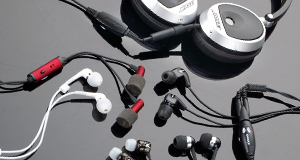
A work post, this – at the end of last year, Dennis bought Bit-Tech, and this year, Custom PC and Bit will be working together on quite a few projects. The plan is to share a lot of what we do behind the scenes to come up with articles suited to print and articles that really work on the web. The new issue of Custom PC, Issue 68, contains a couple of pieces by the Bit guys, and I’ve written a round-up of iPhone headphones for the site. Nice to be back – I previously wrote for Bit on a freelance basis a few years ago (difficult games, politics and technology and unique game controllers).
Overview of the new F1 rules for 2009
Courtesy of Red Bull Racing, and narrated by Sebastian Vettel, here’s a handy CG animation of the main differences between 2008’s F1 cars and the 2009 models. [via James Allen.]
Ebooks are inevitable
Three Ebooks links:
1. ArsTechnica posted an excellent article on ‘the once and future Ebook‘ that’s worth reading start to finish. Suffers perhaps from some Apple fanboyism (I’m not 100% convinced as it claims, that the iPhone/iPod have such huge potential as Ebook readers, certainly not in their current state, and it seems a bit down on the Kindle). The article is quite right that Ebooks are inevitable, though.
2. Meanwhile, Google has launched a mobile version of Google book search, formating classic books for mobile phone browsers.
‘What if you could also access literature’s greatest works, such as Emma and The Jungle Book, right from your phone?’ (And for free). Nice formatting in the iPhone browser, and something I’m going to try reading from in the next couple of weeks.
3. Official-looking Kindle 2 pictures; hopefully there will be an international launch this time. Sensibly, Amazon also appears to be considering opening up access to the Kindle software/infrastruture. This is actually the way I got hooked on the iPod (and then the iPhone) – I got iTunes for free, like it a lot, and later bought the hardware.
The End of Mr Y
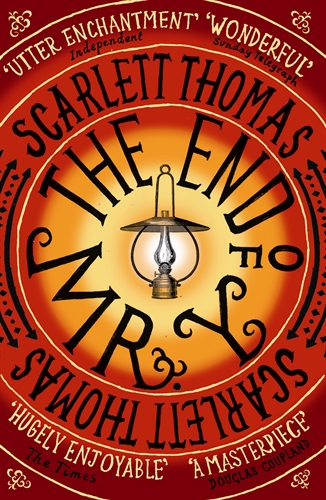 The End Of Mr. Y
1. In which there are minor spoilers because I talk about the plot
The End of Mr Y is about a supposedly cursed Victorian novel. The heroine, PhD student Ariel Manto, finds a copy within the first few pages. She doesn’t spend long prevaricating about whether to read it, and neither do you – several large sections of Mr Y are transposed directly into the text of the novel. The novel-within-a-novel is about Mr Y, a well-to-do businessman who goes to a circus, buys a potion from a mysterious doctor and finds that it allows him to travel into the ‘Troposphere’, a bizarre alternate world seemingly constructed from other people’s consciousnesses. When Mr Y wakes up, the doctor is gone – along with the potion. For the rest of his life, Mr Y finds himself consumed with the desire to find him and get back into the Troposphere.
Back in the real world (or not) Ariel finds herself sucked into the very same quest when she finds that the page in the book which describes the potion has been ripped out. Then she also has to contend with the disappearance of people she knows and there’s a couple of very shady men asking her acquaintances questions about her whereabouts. The plot really works – Mr Y isn’t a slow read, and the action propels you through the pages at a satisfyingly rapid pace.
2. I didn’t notice Ariel Manto is an anagram of ‘I am not real’
Oh, it’s meta alright. The End of Mr Y isn’t afraid to prod and poke at its own fabric, to talk about the nature of words, reality and reading, about what it really means live vicariously through a story:
‘Would you read a cursed book, if you had one? If you heard that there was a cursed book out there and you found it in a bookshop, would you spend the last of your money on it?… I think about my conversation with Wolf last night and wonder if life is as simple as ‘there is a book’. But again I think about stories and their logic and wonder if there can be any such thing as simply ‘there is a book’. Once upon a time there was a book. That makes more sense. There is a book. And then what happens? There is a book and it contains a curse and then you read it and then you die. That’s a proper story.’
At its best, this self-questioning produces writing full of weird resonances, echoes and reflections, with a tone that’s menacing and playful, thought provoking but light enough on its feet to keep moving. At its worst, there are large portions of philosophy recounted as dialogue (‘well this is what Derrida reckons’) which explicitly – and deadeningly – spell out the various options for the philosophical contortions of the plot.
3. D’You Know What I Mean?
Written in transient present-tense, the writing seems imbued with a purposefully unreal blankness; you get a real sense of the way Ariel is ever more tempted to leave ‘reality’ behind and live solely in the mind. It’s also clear, which is important given the way the book wants to push beneath the surface of plot and narrative and meaning. I did get really annoyed with the realistic dialogue, peppered as it is with ‘yeahs’ and ‘but then again’ – it seems purposefully anti-intellectual, as if the book (or its editors) are slightly afraid of its IQ, shy about its commitment to big questions. The prose can feel inert, too – I was never quite convinced by Arial as a real person. She wears her influences, experiences and viewpoints as if they’re clothes and she’s a the shop dummy: they have a shape, a realistic outline, but they don’t – can’t – move right. I cared about her; I was just never sure what she’d be like if we were sitting next to each other on the Clapham omnibus.
4. In The End
I liked the ending, a lot, and looking back on the book, it really cements its strengths.
5. Best Bit
It feels modern. Fractured, from a mind that knows what a hyperlink is. Too many books written by contemporary authors feel like they’re from a time when computers ran on punchcards.
6. In 6 words
A mind alive on the shelf.1
1Someone else said that.
I would like to say thank you on behalf of the group and ourselves and I hope we’ve passed the audition
‘I would like to say thank you on behalf of the group and ourselves and I hope we’ve passed the audition’ – John Lennon, after the Beatles’ final gig, which took place on the roof of the HQ of Apple Corps, just over 38 years ago. What’s surprising is considering all the fights that had come before they sound excellent and look like they’re having a lot of fun.
 The Wired Jester